

About Us
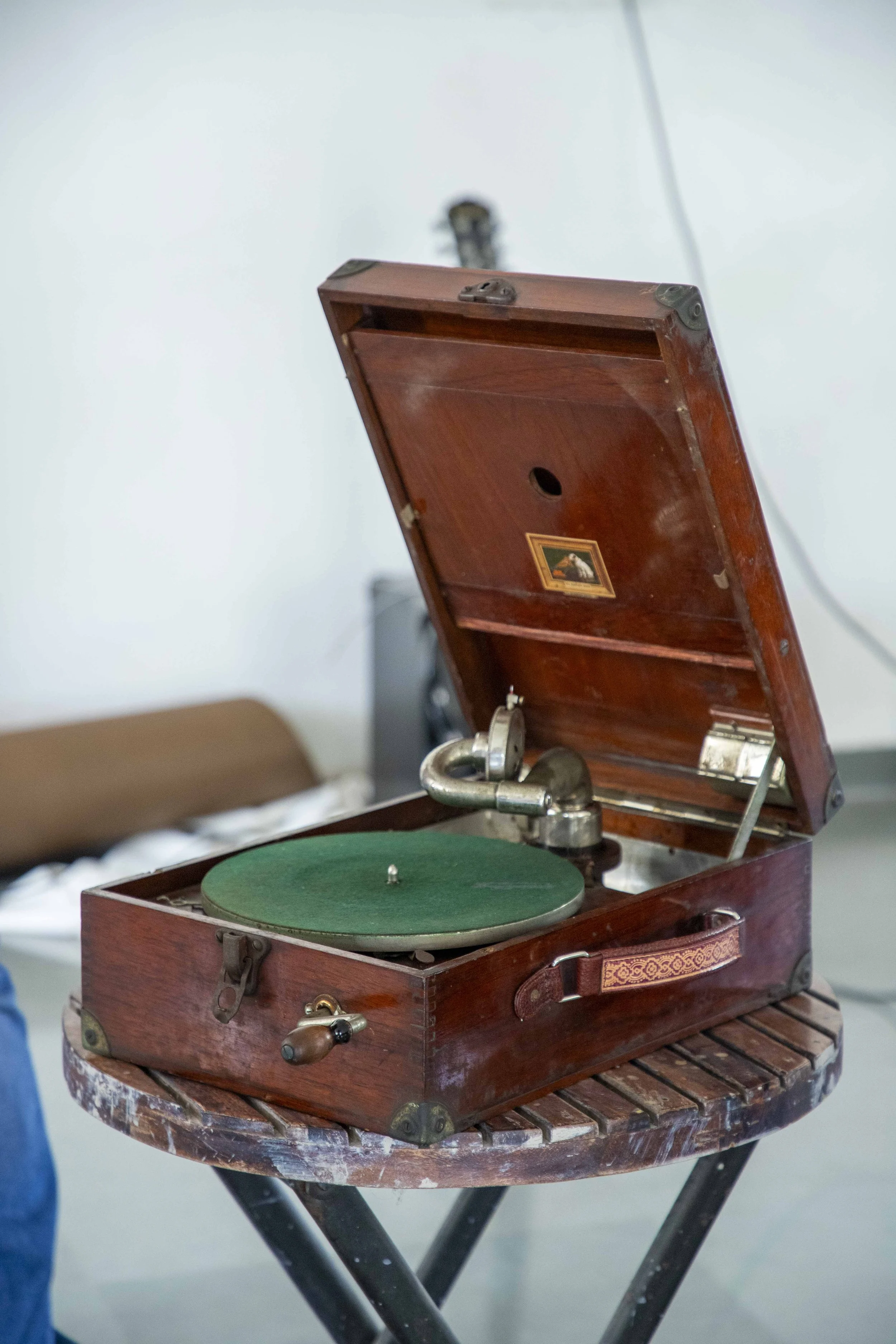
At CeGrams, we preserve and celebrate the unique pedagogy of gramophone records as auditory artefacts, uncovering their role in not only recording and documenting history, but also shaping it. Our focus research area is the pivotal contributions of gramophone recordings to Indian history, especially during the Freedom Movement, and exploring the evolution of Indian music through a rising Modern India aching for independence from the British Crown in the Late 19th to 20th century.
We aim to recognise the importance of this analogue form of material culture from a volatile and politically fertile historical period. The gramophone record was egalitarian without trying; while the ownership of paraphernalia surrounding the entire system was mostly limited, the participation in its creation was not. During the abysmal colonial period, the Indian voice found a way to be truly and quite literally heard and recorded forever.
This project is an attempt to perpetuate the forever intentionally with careful preventive care and novel research.
-
FounderIt all begins with an idea. Maybe you want to launch a business. Maybe you want to turn a hobby into something more.
Meet the Director
Shreyasi Jha (She/Her) is an Archaeologist in training working as a Heritage and Museology Consultant. Her research area has been postcolonial debates around cultural heritage and the relationship between identity formation through material culture.
Her interests lie in the development and representation of humanness in museums, especially the need to contextualise socio-cultural connotations of ritualistic objects from South Asia.
Through this legacy of auditory artefacts in the form of gramophone and vinyl records passed down to her from her parents, she is keen on reforming the perception towards oral and auditory history through the collection of records hosted by the Centre for Gramophone Studies. She finds an immense novelty in the merit of these records through their ability to record a mostly lost sense in preserving history— sound, as well as the materiality of the object in itself and the humanness of analogue.